
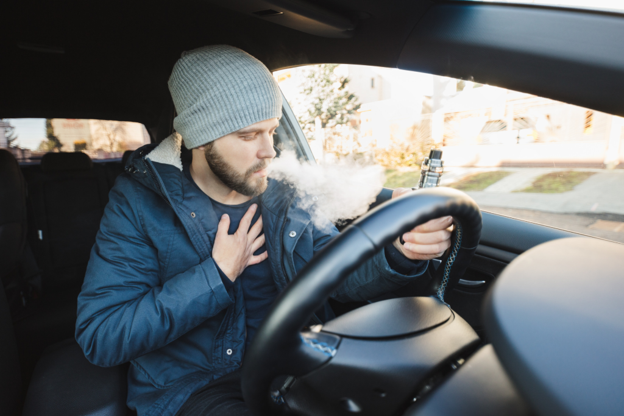
Vape pens (also called e-cigarettes) are discreet, easy to carry, and popular – a study published in May 2026 by the University of Wisconsin-Madison found that 16.9% of young adults 18-28 self-reported e-cigarette use.
Vape pens may contain nicotine, THC, or another substance, and understanding what you’re smoking – and how it can affect your safety – is important.
For young adults in Northern Colorado, e-cigarettes also raise another question: Can you legally vape and drive in Colorado?
The answer depends on what you’re vaping, whether the substance impairs your ability to drive, and where you’re using it.
At No DUI NoCo, our mission is to prevent impaired driving across Larimer and Weld counties by encouraging community responsibility and safer choices. Here’s what Colorado drivers need to know about vape pens, THC products, and staying safe behind the wheel.
What is a vape pen?
A vape pen is a handheld electronic device that heats a liquid or other material to create an aerosol that the user inhales. Depending on the product, it may contain:
- Nicotine: An addictive substance commonly found in e-cigarettes and disposable vapes.
- THC: The psychoactive compound in cannabis that produces a high and can impair driving.
- CBD: A cannabis-derived compound that does not produce the typical THC high, although some products may contain THC or other ingredients.
- Other substances: Some devices contain flavored liquids or cannabis concentrates with varying ingredients and strengths.
Although these products may look similar, their effects can be very different. A product’s appearance or packaging does not necessarily tell you everything about its contents.
Are vape pens legal in Colorado?
Colorado permits certain vaping products, but their legality depends on the substance, the user’s age, the product’s source, and where it is used.
Nicotine vape pens
Colorado prohibits the sale of tobacco products, including e-cigarettes and vaping products, to people under 21, subject to applicable legal exceptions. Federal law also establishes 21 as the minimum age for tobacco sales.
Colorado’s smoke-free law generally prohibits using e-cigarettes in indoor public places and workplaces covered by the law. Additional restrictions may apply in particular locations, including schools and other settings with their own policies.
Buying a vape legally does not mean you can use it everywhere. Always follow applicable state and local restrictions.
THC vape pens
Adults 21 and older may legally purchase recreational cannabis from licensed Colorado dispensaries, subject to state rules. Medical marijuana is also available to eligible patients under Colorado law.
However, legal cannabis use comes with important restrictions:
- Age matters: Recreational marijuana sales are restricted to adults 21 and older.
- Public use is restricted: Cannabis consumption, including vaping THC, is generally prohibited openly and publicly.
- Vehicle use is prohibited: Drivers and passengers cannot use or consume marijuana in a motor vehicle, and Colorado restricts open marijuana containers in vehicles.
- Impaired driving is illegal: A medical marijuana authorization or legal recreational purchase does not give anyone permission to drive while impaired.
These rules apply to THC consumed through a vape pen just as they apply to other forms of marijuana.
For more information, review the Colorado Department of Transportation’s drugged-driving FAQs.
Can you vape while driving in Colorado?
The answer depends on what is in the vape pen.
Driving while vaping nicotine
Colorado’s impaired driving laws focus on whether a substance affects your ability to operate a vehicle. Nicotine vaping is not a DUI offense.
However, vaping while driving can still create safety risks. Reaching for a device, adjusting settings, handling a malfunctioning vape, or taking your attention off the road can distract you from driving.
A distraction lasting only a few seconds can matter when traffic stops suddenly, a pedestrian enters a crosswalk, or another driver makes an unexpected move.
The safest practice is to keep your attention on driving and avoid handling your vape pen behind the wheel.
Driving while vaping THC
Colorado law prohibits marijuana consumption in a motor vehicle, including THC vaping. This restriction applies even if the vehicle is parked on a public road and even if the person using the product is not the driver.
More importantly, driving while impaired by THC is illegal in Colorado.
Under Colorado law, a driver with five nanograms or more of active delta-9 THC per milliliter of whole blood may be subject to a permissible inference of impairment. However, a driver can still be arrested and prosecuted for impaired driving when the measured THC level is below that threshold if the evidence supports impairment.
THC can affect:
- Reaction time and the ability to respond to sudden hazards
- Attention and the ability to track multiple things at once
- Coordination and vehicle control
- Judgment, decision-making, and the perception of time and distance
Vaping THC may feel different from smoking cannabis or consuming an edible, but that does not make it safe to drive afterward. The amount consumed, product potency, individual tolerance, and other substances can all influence impairment.
There is no universal waiting period that guarantees you are safe to drive after using THC. The safest choice is to arrange transportation before consuming cannabis and not drive until you are fully sober and unimpaired.
Learn more in No DUI NoCo’s guide, How High Is TOO High to Drive?

What about Delta-8 THC, hemp-derived THC, and other vape products?
Not every product marketed as THC is sold in a traditional marijuana dispensary. Some products are advertised as hemp-derived, delta-8 THC, or other intoxicating cannabinoids.
This can create confusion for consumers who assume that a product sold outside a dispensary is non-intoxicating or exempt from impaired-driving laws.
Colorado’s impaired driving laws apply to driving under the influence of impairing substances, not just to products purchased at marijuana dispensaries. If a hemp-derived or other THC product impairs your ability to drive, you can face impaired driving consequences.
Product labels, marketing claims, and a familiar place of purchase do not establish that a product is safe to use before driving. Rules governing particular hemp-derived products can also differ from those governing regulated marijuana, so consumers should check current Colorado requirements rather than assume every product is lawful.
When in doubt, do not use an unfamiliar or intoxicating product before driving.

Can you get a DUI for vaping THC even if you’re not high?
Yes. Feeling normal is not a reliable way to determine whether you are safe to drive.
Cannabis affects people differently, and tolerance does not guarantee that reaction time, attention, coordination, and judgment are unaffected. Someone who regularly uses THC may feel less intoxicated than a first-time user without being unimpaired.
THC can also remain detectable in the body after the most noticeable effects have faded. A blood test result and the presence or absence of obvious subjective effects are not interchangeable measures of driving ability.
Colorado law does not provide a blanket exemption for experienced cannabis users, medical marijuana patients, or adults who purchased their products legally.
For more information, read 8 Common Misconceptions About Cannabis and Driving.
Don’t use how high you feel as a test of whether you can drive. Plan a sober ride instead.
What are the risks of mixing THC, alcohol, and driving?
Some people use THC vape pens in social settings where alcohol is also available. Combining the two can increase impairment and make it harder to recognize how much your driving ability has been affected.
Even if a person’s alcohol concentration or THC blood concentration is below a commonly cited threshold, they may still face DUI charges if evidence shows that their driving ability is impaired.
Mixing substances can also make the effects less predictable. A person who feels capable of driving after one substance may underestimate the effects of the combination.
If you are going to drink alcohol or use THC, make a transportation plan before you start. Choose a sober driver who will not consume impairing substances, arrange a rideshare or taxi, or stay somewhere safe until you can travel without driving impaired.
A designated driver should commit to being completely sober, not simply the person who feels the least intoxicated.
How can parents and young adults talk about vape pens and driving?
Vaping, cannabis, and impaired driving can be difficult topics to discuss, especially with teens and young adults. Approaching these conversations with clear information and practical strategies can help make safer decisions easier.
Parents and caregivers can:
- Explain the difference between nicotine and THC. A nicotine vape and a THC vape do not have the same effects, and recognizing the difference matters.
- Discuss distraction as well as intoxication. Even when a substance does not cause a high, handling a device while driving can take attention away from the road.
- Talk about peer pressure. Young drivers should know they can refuse a ride with someone who has used THC or alcohol without having to justify themselves.
- Make a no-questions-asked ride plan. Let young adults and teens know they can call for a safe ride rather than get into a car with an impaired driver.
- Model safe behavior. Adults can reinforce the message by never driving after using impairing substances and never treating impaired driving as harmless or inevitable.
These conversations are particularly important for young drivers who are still developing driving experience and judgment. A clear plan made before a social event is often easier to follow than a decision made under pressure.
For more conversation starters and practical advice, read No DUI NoCo’s guide to How to Talk to Your Teen About Impaired Driving.
Make the Call: Help keep Northern Colorado roads safe
At No DUI NoCo, we believe preventing impaired driving is a shared responsibility. Our work across Larimer and Weld counties encourages people to make safe choices, look out for one another, and take action when someone may be at risk.
Nicotine vaping can distract a driver, while THC vaping can impair the skills needed to operate a vehicle safely, and using marijuana in a motor vehicle is prohibited under Colorado law.
The best way to protect yourself, your passengers, and your community is to plan ahead, understand the law, and never take chances behind the wheel.
Make the Call. Call a sober friend, arrange a safe ride, or speak up when someone is about to drive impaired. If you suspect an immediate impaired-driving danger on the road, call 911.
Every good decision helps make Northern Colorado a safer place for everyone.
No DUI NoCo is a regional coalition working to end impaired driving in Northern Colorado through education, outreach, and community partnerships.
Follow No DUI NoCo on Facebook, Instagram, and Pinterest for more ways you can combat impaired driving in our community.
Frequently Asked Questions About Vape Pens and Driving in Colorado
1. Is it illegal to vape while driving in Colorado?
It depends on what’s in the vape pen. Nicotine vaping is not a DUI offense, although handling a vape can distract you from driving. Consuming marijuana, including vaping THC, in a motor vehicle is prohibited under Colorado law. Driving while impaired by THC is also illegal.
2. Can you get a DUI for vaping THC in Colorado?
Yes. If THC impairs your ability to drive, you can be arrested and charged with DUI or another applicable impaired-driving offense. A legal cannabis purchase or medical marijuana authorization does not exempt you from Colorado’s impaired driving laws.
3. How long after vaping THC can I drive?
There is no single waiting period that guarantees you are safe to drive after vaping THC. Impairment depends on factors such as the product’s potency, the amount consumed, individual tolerance, and other substances used. Plan a sober ride before consuming cannabis, and don’t drive until you’re fully sober and unimpaired.
4. Can you vape THC in a parked car in Colorado?
Colorado prohibits marijuana consumption in a motor vehicle, not just while the vehicle is moving. Don’t assume that parking your car makes consuming THC inside it legal. For specific circumstances, consult current Colorado law or a qualified legal professional.
5. Can you get a DUI for driving after using a nicotine vape?
Nicotine vaping alone does not constitute DUI. However, if using a vape distracts you and contributes to unsafe driving, it can still create a safety risk. Never let a device interfere with your attention to the road.
6. Does vaping THC affect driving differently from smoking marijuana?
Both methods deliver THC, which can affect reaction time, attention, coordination, and judgment. The onset and intensity of effects can vary depending on the product, dose, and individual. Vaping THC should not be considered a safer way to consume cannabis before driving.
7. Can you get a DUI for THC if your blood test is below five nanograms?
Yes. Colorado’s five-nanogram THC threshold may support a permissible inference of impairment, but it is not a minimum level below which driving is automatically legal. A driver can still face DUI charges if other evidence supports a finding of impairment.
8. Is it legal for passengers to vape THC in a car in Colorado?
Colorado prohibits marijuana consumption in a motor vehicle, including consumption by passengers. A passenger’s use of THC in the vehicle is not permitted simply because someone else is driving.
9. Are delta-8 THC and hemp-derived vape pens safe to use before driving?
No intoxicating product should be assumed safe before driving. Hemp-derived and delta-8 THC products can cause impairment, and product labeling does not establish that someone is fit to drive. Colorado’s laws governing specific products may also differ, so check current requirements and avoid driving while impaired.
10. What should I do if my friend vapes THC and then wants to drive?
Don’t get in the car with them, and try to arrange a safe alternative such as a sober friend, taxi, or rideshare. If it is safe to do so, help prevent them from driving. If you see someone driving while apparently impaired and creating an immediate danger, pull over safely and call 911.